Builders Risk vs. Farm Property Insurance
Two different policies protect the same building at two different points in its life. Knowing where one ends and the other begins is how you avoid an uninsured week.
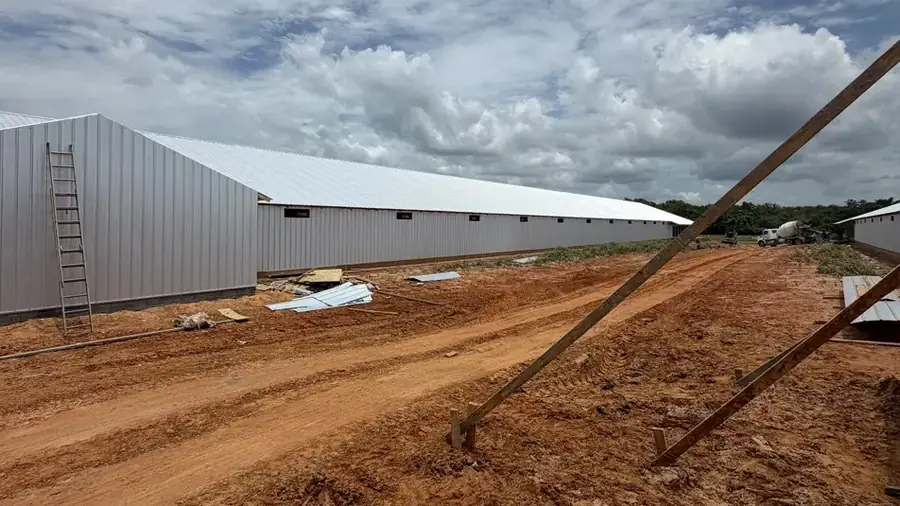
Two Policies, One Building, Two Points in Time
Think of it like this: builders risk covers the building while it is becoming a poultry house. Farm property covers it once it is a poultry house.
They are not interchangeable, and one does not include the other. The most expensive insurance mistake in poultry construction is assuming your farm policy "picks up" the new barn automatically -- or that your builders risk quietly keeps working after the birds arrive.
What Builders Risk Covers
Builders risk is a construction-phase policy. While your house is being built, it typically covers:
- The structure itself, at construction value, as it goes up.
- Materials on site waiting to be installed -- trusses, metal, curtain material, equipment staged in the yard.
- Named weather and fire losses during construction. A wind event that flattens half-framed trusses is exactly the loss this policy exists for.
- The lender's interest: mortgagee, loss payee, and cancellation-notice requirements that construction loans demand.
It is written for a term matched to the build -- in the PGA Program, a 12-month term -- and it is priced on the project's construction value.
What builders risk does NOT cover: your birds (there are none yet), your business income (no flock, no income stream yet), or the building after it is complete and operating.
What Farm Property Covers
Once construction is complete and the house goes into service, farm property coverage takes over. Under the PGA Program that means:
- The completed structure at replacement cost, with the program's 115% replacement cost provision on structures -- if rebuilding costs have risen past your stated limit, the program pays up to 15% above that stated limit.
- Equipment breakdown -- fans, feeders, generators, water and ventilation systems.
- Business income protection once you are placing flocks.
- Wind/hail at the program's 2-3% deductible, versus the 5-10% common on standard farm policies.
What farm property does NOT cover: a structure that is still under construction. Most farm forms exclude buildings in the course of construction, or cover them so narrowly that a real construction loss would not be paid.
The Gap That Catches Growers
There are two danger windows:
Window 1 -- construction starts before builders risk is bound. The builder pours a slab Monday; the insurance call happens Thursday. Those three days are uninsured, and if the lender catches it, your draw schedule stops.
Window 2 -- construction ends and nobody converts the policy. The builders risk term runs out, or the house is complete and operating while still sitting on a construction policy that was never meant to cover an operating farm. A loss in this window is a coverage fight at best.
The PGA Program closes Window 2 by design: the builders risk placement rolls into the permanent PGA farm program at completion, one continuous file, no new binder scramble at turnover. Window 1 is closed by calling before the construction contract starts -- five pieces of information bind the coverage, and the COI can be in your lender's inbox the same day.
Side-by-Side
| Question | Builders Risk | Farm Property (PGA Program) |
|---|---|---|
| When it applies | During construction | After completion, in operation |
| What it values | Construction value of the project | Replacement cost, 115% provision on structures |
| Covers materials on site | Yes | No |
| Covers equipment breakdown | No | Yes -- $150K per breakdown event |
| Covers business income | No | Yes -- grower-selected limit |
| Lender's role | Mortgagee / loss payee on the COI before first draw | Mortgagee on the permanent policy |
| Term | 12 months, matched to the build | Annual, renewing |
The Short Version
Building? You need builders risk, bound before dirt work, with your lender named. Operating? You need farm property. Transitioning between the two is where gaps happen -- pick a program where the conversion is automatic rather than a second sales process.
Meet the Team